Security is often sold as a pile of gadgets, and the result is a house that beeps at you, pings your phone constantly and makes every family member slightly irritable. That is not safety — that is noise. Real security is quieter: a handful of layers that work together, understood by everyone who lives there.
When we review a home, we look at four things before we recommend a single device.
Light does the heaviest lifting
Most opportunistic intrusion starts with an assessment of how visible and how well-lit a property looks. Motion-triggered exterior lighting on entrances, side paths and any dark rear corners changes that assessment immediately — and unlike a camera, it also makes the house easier and safer to come home to at night.
- Light the routes you actually walk: driveway, side gate, back door.
- Aim fixtures at paths and doors, not into neighbours' windows.
- Prefer warm, low-glare fixtures near entrances so the doorway stays legible.
Trim the sightlines, not the garden
Overgrown planting beside a door or along a low fence gives someone somewhere to stand unseen. Keeping the lower portion of shrubs clear near entrances, and keeping gates closed and in good repair, is unglamorous work that quietly removes opportunity.
You are not trying to make your home impossible to enter. You are making it obvious that someone is watching, and that entry would be seen.
Locks and access: simple beats clever
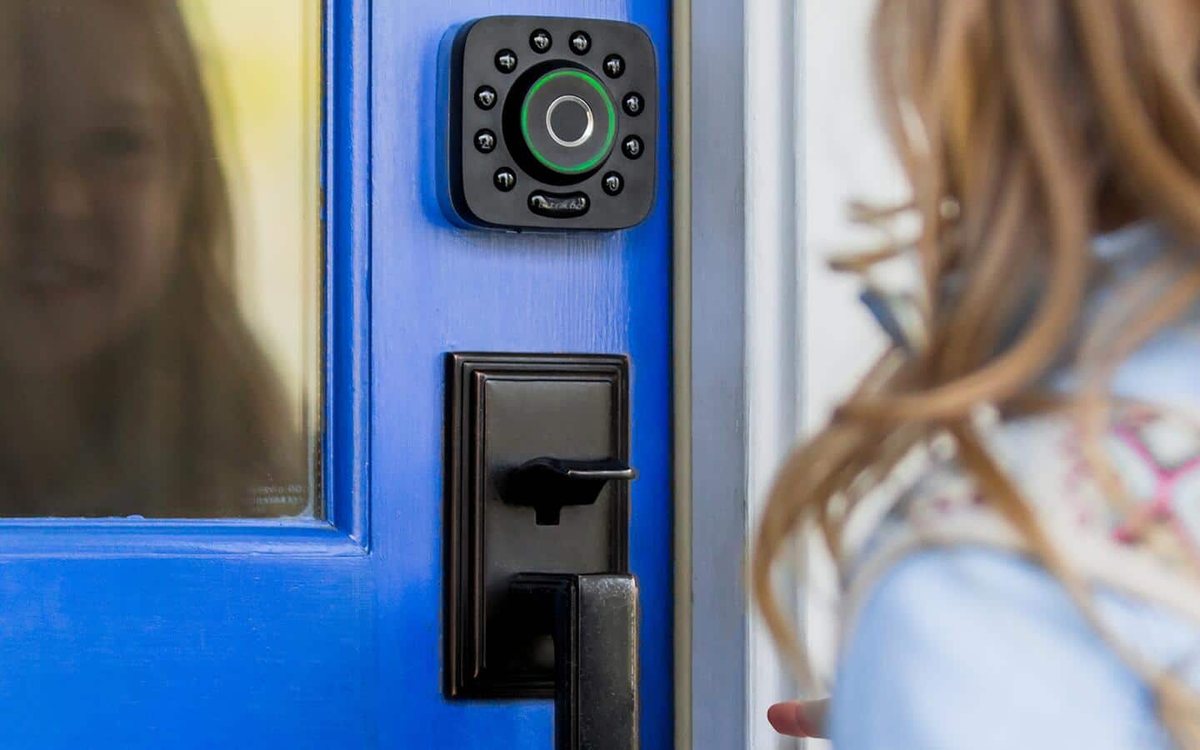
A solid deadbolt on every exterior door, strike plates screwed in properly, and locks that all work without a struggle are the foundation. Smart locks are genuinely useful — for letting in a cleaner, a dog walker or a visiting relative without hiding a key under a pot — but they should never be the only way in, and they should still open with a physical key.
Whatever you install, make sure every adult in the house knows how to use it and how to override it. A clever lock nobody understands becomes a propped-open door.
Cameras with a purpose
Cameras are most valuable when they answer a specific question: who was at the door, did the package arrive, what happened at the side gate. Place them at those points and stop. Cameras covering everything generate footage nobody reviews and alerts everyone learns to ignore.
A sensible starting point
- One doorbell camera at the main entrance.
- One camera covering the driveway or rear access.
- Motion lighting on the paths you use.
- Deadbolts on every exterior door, checked and lubricated.
- One written household routine for locking up.
The routine is part of the system
The most effective layer costs nothing: a household habit. Last person in locks the doors and switches on the exterior lights. Nobody leaves a spare key in a predictable place. Windows on the ground floor are closed and latched when the house is empty. Guests get told the routine rather than being left to guess it.
If you have a security system, review it together once a season. Codes change when people move out. Access should change with them.
Review fire safety at the same time
Security and fire safety are usually treated as separate conversations, which is odd because they share the same hardware layer: sensors, alarms, lighting and a routine. While you are thinking about who can get in, also check that everyone can get out — working smoke alarms, a clear escape route, and a torch where you can actually find it in the dark.
Keep the whole setup modest, explainable and tested. A calm home is one where the systems are boring, and everyone knows how they work.